Fifty Years Later:
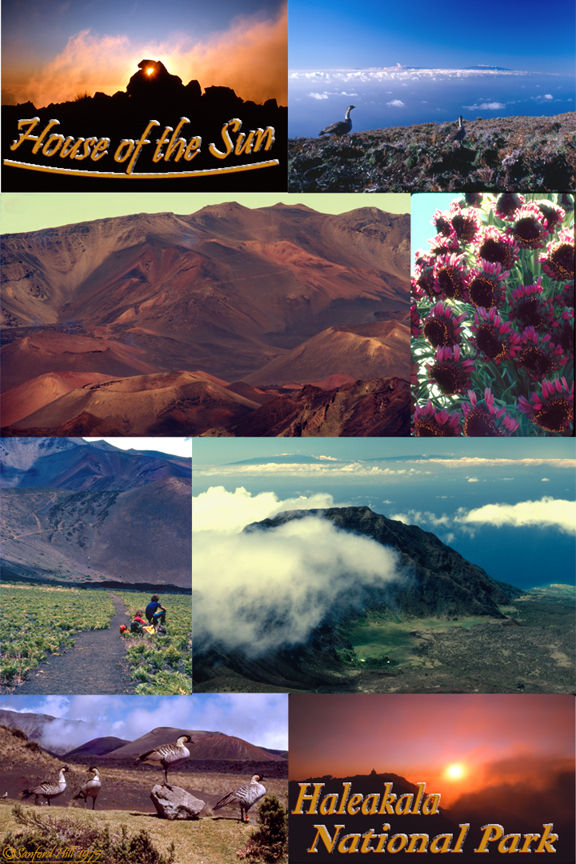
The images in this collection come from a very unique time and perspective. It was a time just before Maui changed dramatically from the perspective on a 21 year old local boy trying to understand and capture that transformation.
I first went up to Haleakala National Park in early 1972. Living in Kula, Haleakala National Park was in our backyard. We could go up to “da crater” for sunset or a stay in the cabins whenever we felt like it. Most of the time the summit was deserted. Usually it was just us and our friends so we would eat, drink, smoke a joint and let our two German shepherds run loose with no problems. Every once and a while someone else would come by or a ranger would drive through, but we mostly had the place to ourselves. It did not feel at all like a National Park, but a magical playground that belonged to us.
Soon we discovered that we could easily reserve the cabins inside the crater by just calling the National Park Service. We could stay for 3 nights at any of the cabins for $2.00 a person per night. That opened up one of the most spectacularly beautiful places on the planet for us to hang out, explore and play in, so we hiked in whenever we could. Most of the people I went in with lived on Maui and were born and raised in Hawaii.
In those days we rarely saw other people or even the rangers inside the crater. It was somewhat overwhelming to have that magnificent majesty all to ourselves. It was such a different reality completely removed from the rest of life that had to be experienced firsthand. Our adventures, exploration and encounters challenged and opened up our young minds in ways we did not expect. I know for me it helped me understand my culture and place in the universe. Where else can you stand on top of a planet in the middle of a vast ocean as it journeys through the cosmos?
In 1972 I began attending Maui Community College majoring in photography. I was lucky to have a high quality 35mm camera system and a great professional photography professor. I started photographing Maui as it began to change. I was inspired by the beautiful photography in the coffee table book “Haleakala, The Last Hawaiian Place”. I wanted to create a collection similar to that, but from the perspective of a 21 year old local boy would lived on Maui. I would have the advantage of photographing the Maui I was part of over many years. Haleakala National Park quickly became one of my favorite subjects.
To me and my tribe, Haleakala National Park was not a place to visit, but part of our life and where we lived. It was a place we could feel the mana of Maui and a part of the land we loved. This was the time of the “Hawaiian renaissance” when the people of Hawaii were rediscovering their history, culture and their relationship to Hawaii. We were also part of the counterculture of the time that was searching for a better way to live.
As I write this fifty years later I’m concerned that Haleakala National Park has become a place that caters more to visitor industry than the people of Maui. The Haleakala National Park experience is very different today than when these Photographs were taken.
I hope these photographs and stories will help remind people that Haleakala National Park is more than a place to visit and take a selfie. That they will show people in the future what the people of Maui gave up allowing thousands of people a day to visit Haleakala National Park. Unfortunately, they will just get a glimpse of what we learned and felt 50 years ago.
We are grateful that one of the great wonders of the earth has been persevered by the National Park Service. I am very proud that 300 of my Haleakala photographs and many of my crater tales are now park of the permanent collection of Haleakala National Park Museum and the US National Park Service. Hopefully these photos and stories will preserve for future generations the Haleakala that we explored and experienced when we and Haleakala National Park were younger.